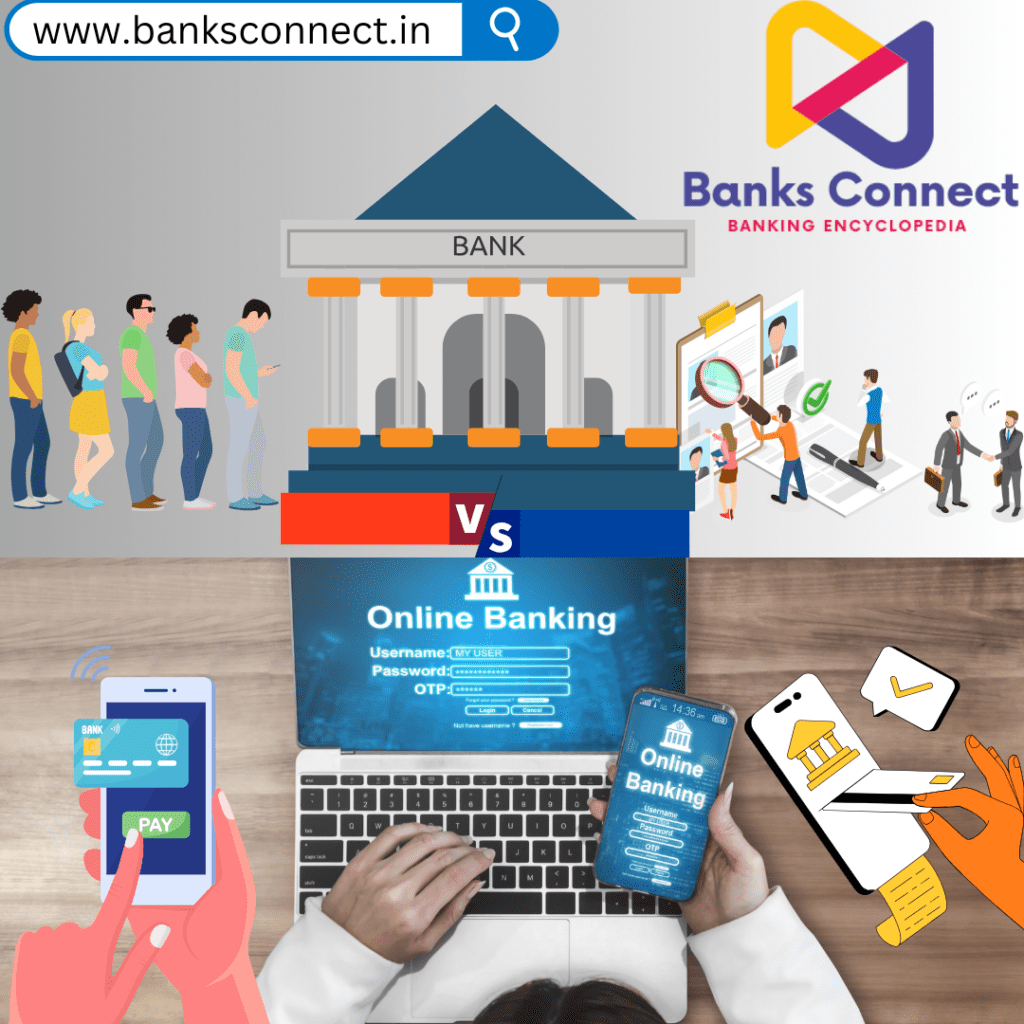

Banking has evolved significantly, giving us two distinct options—traditional banking and digital banking. While traditional banking has been around for decades, digital banking offers a modern, convenient alternative. Let’s compare the two to help you choose the right fit.
What Is Traditional Banking?
Traditional banking involves visiting a physical branch for services like deposits, withdrawals, and loan applications.
What Is Digital Banking?
Digital banking delivers the same services through online platforms, allowing you to manage finances anytime and anywhere.
Advantages of Traditional Banking
- Face-to-Face Assistance
- Speak directly with staff for personalized guidance.
- Trusted and Familiar
- Many prefer the reassurance of in-person transactions.
- Cash-Friendly
- Convenient for cash deposits and withdrawals.
- Complex Transactions
- Ideal for loans and investments that need detailed discussions.
Drawbacks of Traditional Banking
- Time Consuming
- Branch visits can be lengthy, especially during busy hours.
- Limited Accessibility
- Branches may not be available everywhere or open at all times.
- Higher Costs
- Maintaining branches means more fees for customers.
Advantages of Digital Banking
- 24/7 Access
- Manage your account and transactions whenever you want.
- Convenience at Your Fingertips
- No need for branch visits—everything is online.
- Cost-Effective
- Lower fees as there’s no physical infrastructure to maintain.
- Extra Features
- Tools like expense tracking, bill payments, and instant fund transfers.
- Environmentally Friendly
- Reduces the need for paper and transportation.
Drawbacks of Digital Banking
- No Personal Interaction
- Limited face-to-face guidance for complex needs.
- Technical Glitches
- Apps or websites may face downtime.
- Cybersecurity Concerns
- Risks of hacking and fraud, though banks take precautions.
- Learning Curve
- Some people may find it challenging to adapt to digital platforms.
Choosing the Right Banking Style
- Go Traditional if you value personal interaction, handle cash regularly, or need help with complicated services.
- Go Digital if you prefer convenience, lower fees, and tech-driven solutions.
Conclusion
Both traditional and digital banking serve different needs. Understanding their pros and cons helps you make informed decisions about managing your money. Whether you prefer in-person trust or the convenience of online tools, banking has never been more flexible.