
In the modern age of digital transactions, cheques remain an essential mode of payment in India, especially for larger transactions. Despite the rise of mobile banking and online payments, cheques continue to play a crucial role in our financial system. But what exactly is a cheque, and why do people still use it? This blog will explain everything you need to know about cheques—its types, uses, risks, and real-life examples.
What is a Cheque?
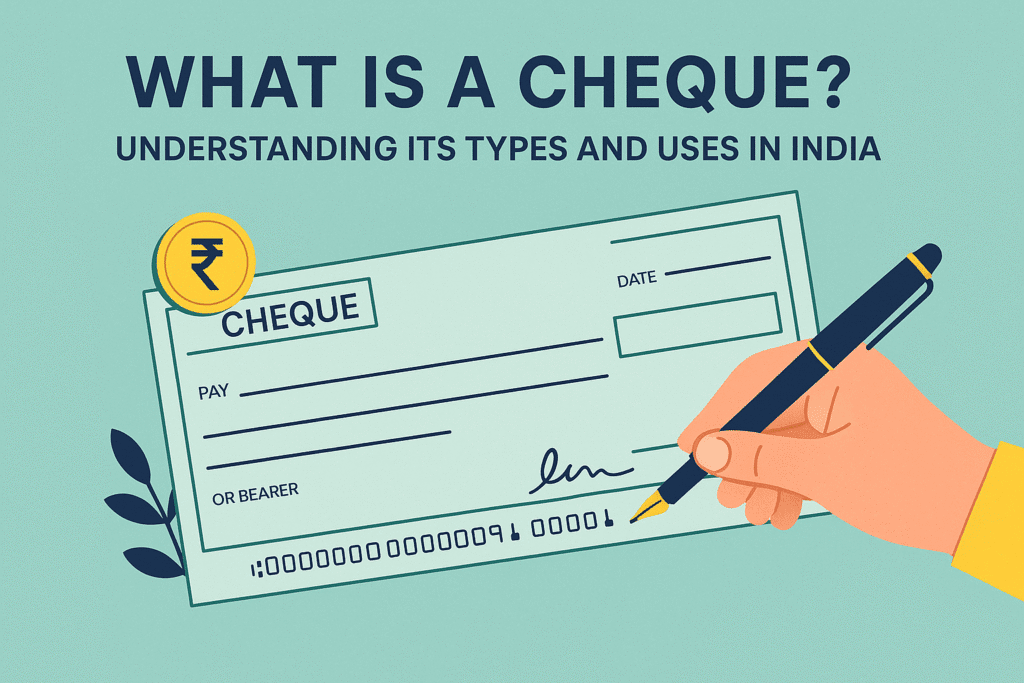
A cheque is a written order from a bank account holder (the issuer) directing the bank to pay a specific amount of money to the person or entity named on the cheque (the payee). Essentially, it serves as a paper-based instruction for transferring funds. When the payee presents the cheque to the bank, the bank processes it, and the designated amount is transferred from the issuer’s account to the payee’s account.
It’s an easy, reliable, and often secure way to make payments, especially for transactions where physical cash isn’t ideal.
Types of Cheques
Cheques come in different types, each serving a specific purpose and providing varying levels of security. Let’s break down the most common types of cheques used in India.
1. Bearer Cheque
A Bearer Cheque is a type of cheque that can be cashed by anyone who presents it at the bank. No name is written on this cheque, meaning whoever holds it is entitled to the funds.
Example: If you write a bearer cheque without mentioning the payee’s name, anyone who possesses the cheque can walk into the bank and withdraw the money.
Risks: Because it’s payable to anyone who holds it, a bearer cheque is highly risky if lost or stolen.
2. Order Cheque
An Order Cheque is more secure than a bearer cheque because it specifies a particular person or entity (the payee) who can cash it. Only the person whose name is mentioned on the cheque can encash it.
Example: If you write a cheque to “Mr. Sharma,” only Mr. Sharma can cash it, and no one else can.
Why It’s Safer: This type of cheque ensures that only the intended recipient can receive the money, reducing the risk of fraud.
3. Crossed Cheque
A Crossed Cheque is a cheque with two parallel lines drawn on the top left corner. These lines act as a security feature, indicating that the money will only be deposited into a bank account and cannot be cashed as physical cash.
Example: If you pay a vendor using a crossed cheque, the money will go directly into their bank account rather than being paid out in cash.
Purpose: This ensures that the funds are traceable and reduces the risk of theft.
4. Post-Dated Cheque (PDC)
A Post-Dated Cheque is a cheque written with a future date. The bank will only honor the cheque on or after the date written on it, not before.
Example: You write a post-dated cheque for monthly rent payments, with the date set for the 5th of every month.
Common Uses: Post-dated cheques are commonly used for recurring payments like rent, loan installments, and subscription services.
5. Stale Cheque
A Stale Cheque refers to a cheque that is more than three months old. Once a cheque exceeds this time limit, it is considered invalid, and the bank will not accept it for processing.
Example: If you wrote a cheque in January and tried to deposit it in May, the bank would consider it stale and reject it.
Why It Happens: The rule ensures that cheques are processed in a timely manner and that outdated financial instructions are not acted upon.
6. Blank Cheque
A Blank Cheque is a cheque where the amount or the payee’s name is not filled in. The only thing written on the cheque is the account holder’s signature.
Risks: Blank cheques are highly risky and should only be issued to trusted individuals, as the person receiving it can fill in any amount and encash it.
7. Cancelled Cheque
A Cancelled Cheque is one that has been voided by drawing two lines across it and writing “Cancelled” on it. This type of cheque cannot be used for payment but is often required for certain administrative purposes.
Common Uses:
- For Know Your Customer (KYC) procedures
- To provide details for Electronic Clearing Service (ECS)
- For setting up direct deposit accounts
Why Do People Use Cheques?
Cheques continue to be a popular payment method in India for various reasons:
1. To Pay Salaries
Employers often use cheques to pay salaries to employees. It’s a secure and formal method of payment.
2. Rent Payments
Many landlords prefer receiving rent payments via cheque, especially post-dated cheques for monthly rent, providing convenience for both parties.
3. For Refunds
Cheques are commonly used by companies and institutions (like schools or colleges) to issue refunds to customers or students.
4. Loan Payments
When repaying loans, borrowers may issue post-dated cheques to their lenders, ensuring timely payments.
5. To Avoid Handling Cash
For higher-value transactions, cheques eliminate the need for cash and provide a written record of payment.
6. To Maintain a Written Record
Using cheques helps in keeping a clear record of payments, which can be useful for bookkeeping and legal purposes.
Risks in Using a Cheque
While cheques offer convenience and security, there are some risks involved:
1. Cheque Bounce
If there are insufficient funds in the account to cover the cheque amount, it will “bounce,” and the payment will not be processed. This could lead to legal consequences for the issuer.
2. Lost or Stolen Cheque
If you lose a cheque or if it gets stolen, it could be misused, especially if it is a bearer cheque. This could result in a financial loss.
3. Wrong Signature
If your signature does not match the one on file with your bank, the cheque will be rejected.
4. Blank Cheque
Issuing a blank cheque can be dangerous, as the recipient may fill in any amount, potentially leading to significant financial loss.
Real-Life Example of Using a Cheque
Imagine you are paying rent to your landlord, Mr. Sharma. You write a cheque for Rs. 10,000 dated 5th May with his name, “Mr. Sharma,” written on it. After you sign the cheque, Mr. Sharma deposits it into his bank account, and the bank processes the payment. The Rs. 10,000 is then transferred from your account to his.
This simple yet secure process makes cheques a preferred method for rent payments, loan repayments, and various other financial transactions.
Real-Life Uses of Cheques in India
- Rent Payments: Post-dated cheques are used for monthly rent payments.
- Loans: Banks accept post-dated cheques as a guarantee for loan repayments.
- Vendor Payments: Businesses and companies use crossed cheques to pay vendors for goods or services.
- Refunds: Schools or companies use cheques for refunding fees or deposits.
- Reimbursements: Offices issue cheques to employees for travel or expense claims.
Conclusion
Though electronic payments and digital banking are on the rise, cheques remain a trusted and widely used form of payment in India. Understanding the different types of cheques, their uses, and the risks involved can help individuals and businesses manage their finances effectively. Whether for salary payments, rent, or vendor transactions, cheques continue to be an important tool in the Indian banking system.
For more updates on banking and finance in India, keep visiting BankConnect.