
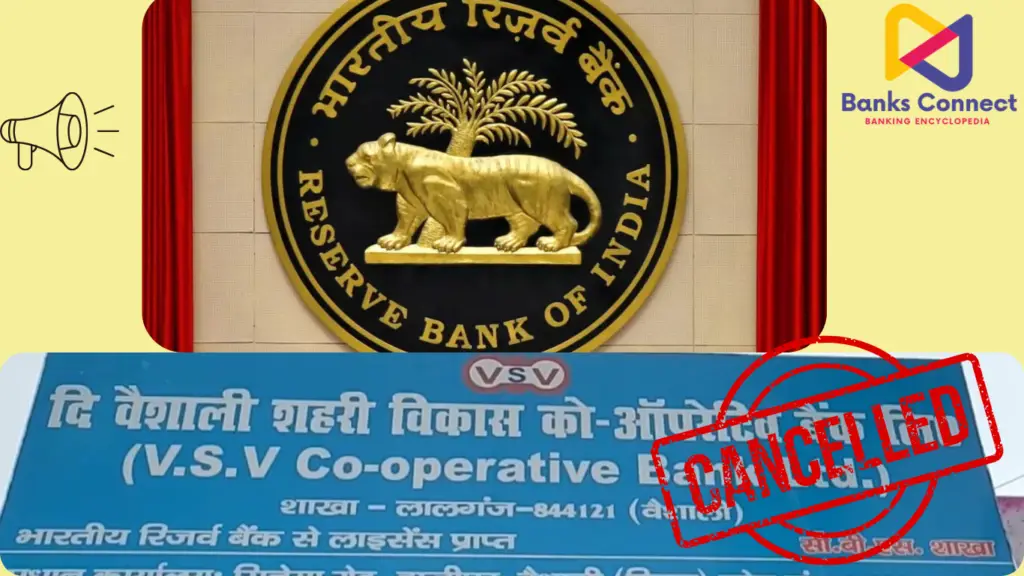


In a recent move to safeguard depositor interests and maintain financial stability, the Reserve Bank of India (RBI) cancelled the banking license of The Vaishali Shahari Vikas Co-operative Bank Ltd., located in Hajipur, Bihar. Effective December 30, 2024, this action underscores the importance of stringent regulatory oversight in India’s banking system. Let’s break down the reasons behind this decision and what it means for depositors.
Why Did the RBI Cancel the License?
The RBI’s decision was based on a detailed assessment of the bank’s financial health and operations. Key factors included:
- Weak Capital Base:
The bank lacked sufficient capital and earnings potential, falling short of regulatory requirements under Section 11(1) and Section 22(3)(d) of the Banking Regulation Act, 1949. - Regulatory Violations:
The bank failed to meet several conditions outlined in Section 22(3), ranging from capital adequacy to operational compliance. - Depositor Risk:
Continuing the bank’s operations posed significant risks to its depositors, violating the fundamental principle of protecting public interest. - Inability to Repay Deposits:
With its deteriorating financial position, the bank was unable to assure full repayment to depositors, a core function of any financial institution. - Public Interest Concerns:
Allowing the bank to continue operating would have undermined depositor confidence and public trust in the cooperative banking sector.
Immediate Impact of the Decision
With the cancellation of its license, The Vaishali Shahari Vikas Co-operative Bank Ltd. can no longer perform banking activities such as accepting deposits or repaying customers. The RBI has also directed the Registrar of Cooperative Societies, Bihar, to initiate winding-up proceedings and appoint a liquidator for the bank.
Depositor Safety: What You Need to Know
For depositors, the Deposit Insurance and Credit Guarantee Corporation (DICGC) offers critical protection. Here’s how it works:
- Each depositor is insured for up to ₹5,00,000 under the DICGC Act, 1961.
- Over 98% of depositors are eligible for full reimbursement of their deposits.
- As of December 5, 2024, ₹58.33 crores have already been paid out to eligible depositors.
This highlights the importance of deposit insurance in maintaining public confidence during such crises.
Key Takeaways for Stakeholders
- For Banks:
Adhering to regulatory requirements and maintaining financial health are non-negotiable for sustained operations. - For Depositors:
Regularly review the financial health and compliance status of your bank to ensure the safety of your savings. - For Policymakers:
Strengthening oversight and improving depositor awareness can help prevent such failures in the future.
A Glimpse at the Regulatory Framework
The RBI’s action reflects the implementation of the Banking Regulation Act, 1949, which sets clear standards for banking operations:
- Section 11(1): Mandates minimum capital requirements for banks.
- Section 22(3): Outlines conditions for maintaining a banking license.
- Section 56: Extends these provisions to cooperative banks, ensuring they meet similar compliance standards.
By enforcing these laws, the RBI ensures the stability and integrity of India’s financial ecosystem.
Conclusion
The RBI’s decision to cancel the license of The Vaishali Shahari Vikas Co-operative Bank Ltd. demonstrates its unwavering commitment to safeguarding depositors and upholding financial stability. While such actions are never easy, they are essential to preserving public trust and ensuring the resilience of the banking system.
For depositors, the incident serves as a reminder to stay informed about their bank’s financial health. For the broader financial community, it’s a call to prioritize compliance and transparency.